
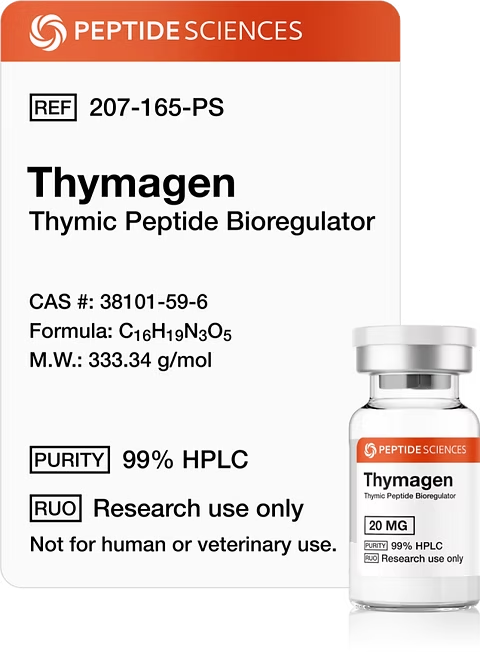
Thymagen (Thymogen) 20MG: Research Overview, Immune Function, Mechanism, and Safety Information
Introduction to Thymagen (Thymogen) 20MG Research
Thymagen, also known as Thymogen, is a peptide compound associated with thymus-derived peptide research and immune system studies. The thymus gland plays a vital role in immune development, particularly in the maturation and regulation of T lymphocytes, which are important cells involved in immune responses.
Interest in Thymagen research has increased because scientists continue exploring how peptide-based signalling molecules may influence immune communication, cellular regulation, and biological processes related to immune balance.
This article provides an educational overview of Thymagen (Thymogen) 20MG, including its scientific background, mechanism of action, research areas, and safety considerations.
What Is Thymagen (Thymogen)?
Thymagen is a synthetic peptide associated with thymic peptide research. It belongs to a group of compounds known as peptide bioregulators, which are studied for their possible role in cellular communication and biological regulation.
The thymus is a specialised immune organ responsible for supporting the development of T cells. Because of this connection, Thymagen research has focused on understanding how thymus-related peptides interact with immune pathways.
Researchers investigate Thymagen in areas such as:
- Immune system regulation
- T-cell development
- Cellular signalling
- Peptide biology
- Immune response mechanisms
How Does Thymagen Work?
Like other peptide compounds, Thymagen is studied because of its potential interaction with biological signalling pathways. Peptides act as molecular messengers that allow cells to communicate and coordinate different biological functions.
Research into Thymagen focuses on several mechanisms:
T-Cell Development and Regulation
The thymus is responsible for the maturation of T lymphocytes. Researchers study thymic peptides to better understand how these immune cells develop and function.
Immune Communication
The immune system depends on communication between various cells and signalling molecules. Thymagen research examines how peptide signals may influence these communication networks.
Cellular Response Pathways
Scientists explore how peptide molecules interact with cellular processes involved in maintaining biological balance.
Research Areas Associated With Thymagen 20MG
Thymagen has been investigated in several areas of immunology and molecular biology.
Immune System Research
A major area of interest is understanding how thymus-related peptides may influence immune system activity.
Researchers study:
- Immune cell communication
- T-cell activity
- Immune response pathways
- Biological regulation
Age-Related Immune Research
The thymus naturally changes throughout life, which has led researchers to investigate thymic peptides in relation to immune ageing.
Scientific studies explore how changes in thymus activity may affect immune system function over time.
Peptide Bioregulator Studies
Thymagn is part of a broader scientific field focused on understanding how short peptide sequences may interact with biological systems.
Potential Scientific Importance of Thymagen Research
Peptide research has become an important area of modern biotechnology because it provides insight into how cells communicate and regulate biological functions.
Scientific interest in Thymagen includes:
- Understanding immune pathways
- Exploring cellular signalling systems
- Studying thymus-related biology
- Investigating peptide interactions
However, research findings depend on study design, methodology, and available scientific evidence. Experimental research results do not always translate directly into approved medical applications.
Thymagen and Immune System Science
The immune system functions as a complex network involving cells, proteins, and signalling molecules. The thymus plays a key role in preparing immune cells, particularly T lymphocytes.
Important areas of immune research include:
T Lymphocytes
T cells are specialised immune cells that help coordinate immune responses and recognise biological signals.
Cytokine Signalling
Cytokines are communication molecules that help regulate interactions between immune cells. Researchers examine how peptide compounds may relate to cytokine pathways.
Immune Balance
A properly regulated immune system requires a balance between activation and control mechanisms. Peptide research helps scientists understand these complex processes.
Safety Considerations and Responsible Research
Understanding safety is an important part of evaluating peptide research. Since immune-related compounds may interact with complex biological pathways, researchers consider multiple factors.
Important considerations include:
- Scientific evidence
- Biological activity
- Individual health factors
- Long-term research findings
- Professional medical evaluation
Anyone interested in immune-related treatments should seek advice from qualified healthcare professionals.
Regulatory Information in the USA
In the United States, peptide compounds are subject to regulatory requirements depending on their classification, intended use, and approval status.
Research compounds and approved medical therapies follow different regulatory pathways. Individuals should use reliable medical sources and consult healthcare professionals for accurate information.
Understanding the difference between experimental research materials and approved healthcare products is essential for responsible decision-making.
What is Thymagen (Thymogen)?
Thymagn, also known as Thymogen, is a peptide compound studied in relation to thymus biology, immune regulation, and cellular communication.
Why is Thymagen researched?
Scientists study Thymagen to understand peptide signalling, immune pathways, and thymus-related biological processes.
Is Thymagen a hormone?
No. Thymagn is a peptide compound associated with immune research rather than a traditional hormone.
How does the thymus affect immunity?
The thymus supports the development and maturation of T cells, which play important roles in immune system function.
Conclusion
Thymagn (Thymogen) 20MG represents an area of interest within peptide science, immunology, and cellular biology research. Scientists continue investigating how thymus-related peptides interact with immune pathways and biological communication systems.
As peptide research advances, understanding scientific evidence, regulatory considerations, and responsible medical guidance remains essential. Continued study of thymic peptides may provide deeper insights into immune regulation and the complex mechanisms behind cellular health.
Reviews
There are no reviews yet.